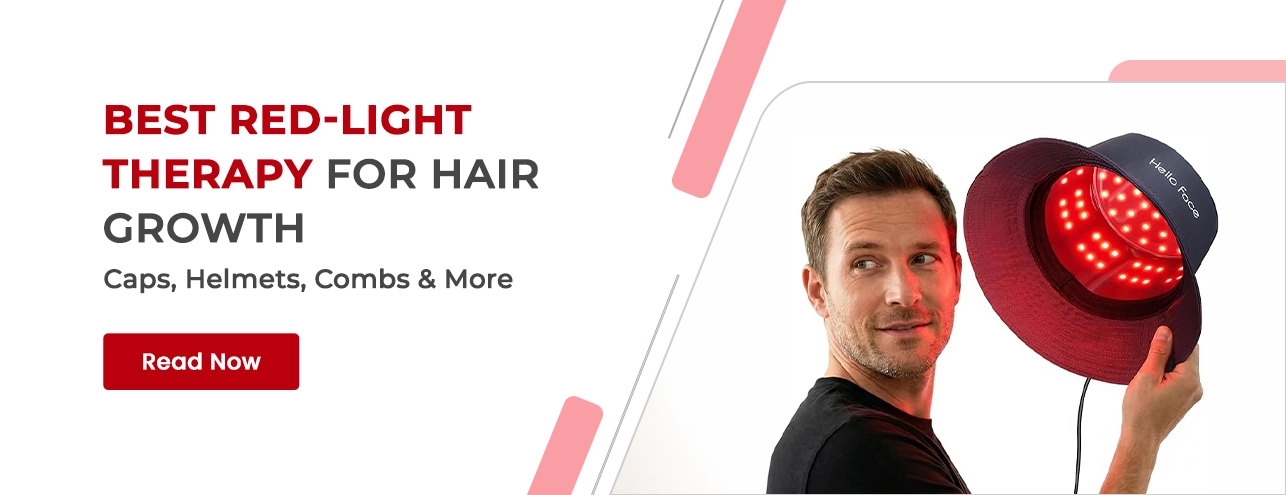
Red-light therapy (LLLT) uses red and near-infrared light to support scalp blood flow and may help encourage hair growth. It’s not a cure, and results vary. It comes as caps, helmets, or combs/brushes, with caps and helmets offering hands-free use and combs offering a targeted, budget option. Before buying, check the wavelength, FDA clearance, and comfort, and expect 3–6 months of consistent use before seeing any change. A few brands available on Ubuy include Carviki, Vitaly, MrBBox, and Skillyes. Always consult a dermatologist before starting any hair loss treatment.
If you’ve noticed your hair thinning, chances are you’ve already come across red light therapy in your research. It’s become one of the most talked-about non-invasive options for people looking to support healthier-looking hair without surgery or daily medication. But with caps, helmets, combs, and brushes all claiming to do the same job, figuring out which device actually suits your routine can be confusing, which is exactly why finding the best red-light therapy for hair growth starts with understanding how these devices differ. This guide breaks down what red light therapy is, how the different device types compare, and what to look for before you buy so you can make a more informed decision.
The best red-light therapy for hair growth (also called low-level laser therapy or LLLT) uses red and near-infrared light, typically in the 630–670nm range, aimed at the scalp. The idea is that this light energy may help stimulate blood flow to hair follicles and support the natural hair growth cycle. It’s a drug-free approach, which is part of why it appeals to people who’ve tried topical treatments like minoxidil or scalp serums and are exploring alternative options.
It’s worth being clear-eyed here: red light therapy isn’t a miracle cure, and results can vary significantly from person to person depending on the cause and stage of hair thinning. It’s generally considered most relevant for pattern hair loss rather than every type of hair loss conditions.
Before adding a device to your routine, it helps to weigh the benefits against the limitations. Here’s a more detailed look at both sides.
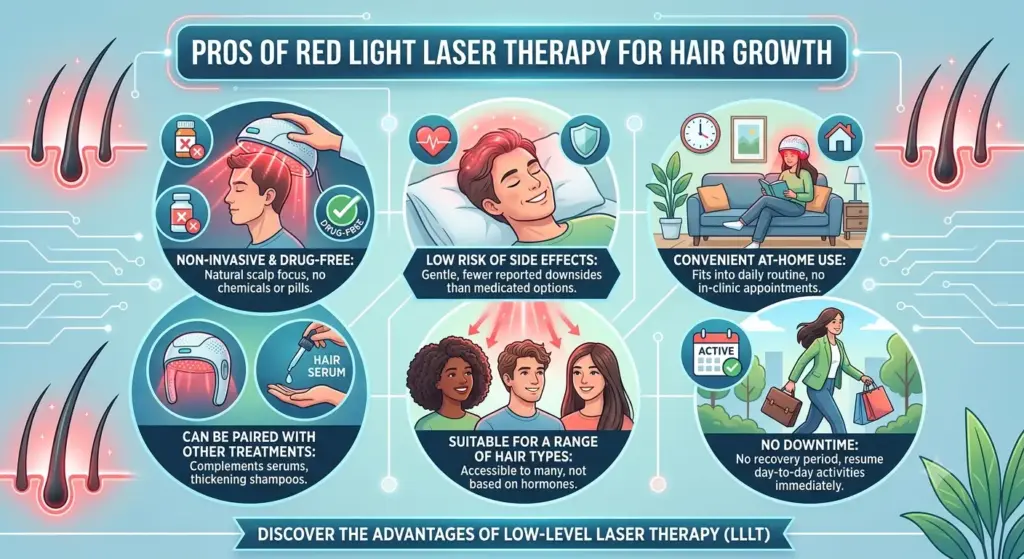
Unlike oral medications or topical treatments, red laser therapy for hair growth doesn’t involve ingesting anything or applying chemicals to the scalp, which appeals to people who’ve had side effects from other options or simply prefer a more natural approach.
Because it doesn’t rely on heat, chemicals, or systemic absorption, red LED light therapy for hair loss is generally considered gentle on the scalp when used as directed, with fewer reported downsides than some medicated treatments.
Caps, helmets, combs, and brushes are all designed for use at home, so there’s no need for in-clinic appointments once you own the device; sessions can fit around a daily routine.
Many people use LED hair growth treatment with scalp serums, thickening shampoos, or other hair care steps as part of a broader routine, rather than relying on it in isolation.
Because they work externally on the scalp rather than alter hormones internally, scalp therapy devices are generally considered accessible to a wide range of users, though individual scalp sensitivity should always be taken into account.
There’s no recovery period involved, so it doesn’t interrupt day-to-day activities the way some clinical procedures might.

While some research points to potential benefits for follicle activity and scalp circulation, the overall body of evidence isn’t as extensive as it is for certain medicated treatments, and results can be inconsistent across studies.
This isn’t a quick fix; most guidance suggests several sessions a week over months before any noticeable change, which requires genuine commitment.
Red light therapy is generally considered more relevant to pattern hair loss than to other causes of thinning, so it may be less suitable depending on what’s driving your hair loss.
Not every one of the best hair growth devices on the market uses clinically studied wavelengths, diode types, or power levels, so a lower-quality device may be far less effective than a well-specified one, even if both are marketed similarly. This is also why it’s worth comparing the best red light therapy devices for hair loss by specifications rather than price alone.
Higher-quality caps and helmets, in particular, can represent a meaningful investment, which is worth weighing against the gradual and uncertain nature of results.
Since hair loss can stem from a range of underlying causes, including some that need medical attention, relying on the best red-light therapy for hair growth without first understanding the cause could delay more appropriate treatment.
Not all red light therapy for hair loss at home comes in the same form factor. Here’s how the main categories differ:

A red light cap for hair growth is typically a soft, flexible cap lined with LED or laser diodes that sits close to the scalp. Caps are popular because they’re comfortable, often battery-powered, and easy to wear while doing other tasks around the house.
A red light therapy helmet has a rigid, dome-shaped structure and typically houses more diodes than a cap, aiming for broader, more even scalp coverage. A red light helmet for hair growth is often positioned as a step up in convenience since it’s hands-free and doesn’t need to be held or adjusted during use. Check out what the Redditor has commented about the iRestore red light cap.
“I have the iRestore helmet, and I use nothing else on my hair aside from that and make sure that I keep up with my supplements, particularly iron. I noticed a big difference with the troublesome spot around my center part that was thinning to the point that I was having to do strategic combovers. The hair there is absolutely growing back after about 3 months of use every other night. It would be faster if I used minoxidil, but I didn’t want to commit to that.”
Source: r/redlighttherapy (Reddit)
For a more targeted approach, red light therapy brushes and LED hair growth combs let you guide the light directly along the parting or thinning areas. These tend to be more affordable and portable than caps or helmets, making them a good entry point if you’re testing the waters. Many also include gentle scalp massage or vibration functions.
With so many caps, helmets, combs, and brushes on the market, narrowing down the best red-light therapy for hair growth comes down to a handful of practical factors. Here’s what’s worth checking before you commit:
Look for a specific number, ideally within the 630–670nm therapeutic range, rather than vague “red light” claims without figures.
Specifically for hair growth use, where available, browsing the hair scalp treatments range makes it easier to compare devices with clear certifications side by side.
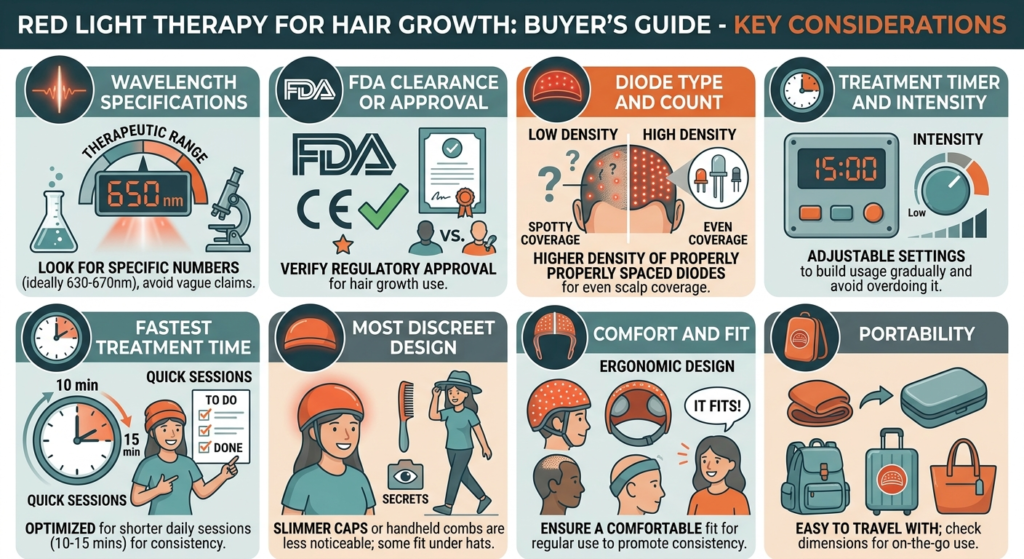
A higher density of properly spaced diodes is generally used to achieve more even scalp coverage.
So you can build usage gradually rather than overdo it early on.
Some caps and helmets from the best red-light therapy for hair growth lineup are designed for shorter daily sessions, often as little as 10–15 minutes, which can make it easier to stay consistent if you’re short on time.
If you’d rather not be seen wearing a visible device, slimmer caps or handheld combs tend to be far less noticeable than bulkier helmets, and some cap designs are made to sit quietly under a hat or cover.
Especially for caps and helmets meant for regular use, since an uncomfortable device is far less likely to get used consistently, the wider hair care category is a good place to compare fit and design options.
If you’re planning to travel with the device or use it outside the home, and worth checking against other everyday essentials in beauty and personal care for your routine.
A quick look at brands offering the best red-light therapy for hair growth that you can currently shop on Ubuy, compared side by side.
| Brand | Device Type | Key Feature | Best For |
|---|---|---|---|
| Carviki | Cordless cap | Lightweight, hands-free design built to support scalp health and reduce shedding | Buyers wanting a comfortable, low-fuss daily cap |
| Vitaly | Cap | Calibrated, consistent light output via a magnetic controller connection | Users who want steady, predictable sessions |
| MrBBox | Cap | Simple, everyday design focused on comfort and ease of use | First-time buyers easing into a routine |
| Skillyes | Cap & helmet | Detachable design (cap) or full-scalp coverage with higher-density LEDs (helmet) | Buyers who want flexibility between targeted and full-coverage sessions |
| iRestore | Helmet | Rigid, hands-free helmet with broad, even scalp coverage and multiple laser/LED diodes | Buyers wanting full-scalp coverage without holding a device |
The best red-light therapy for hair growth uses specific wavelengths of red and near-infrared light aimed at the scalp. It’s designed to support blood flow to hair follicles and may help encourage the natural hair growth cycle, though it works gradually rather than instantly.
It’s not a myth, but it’s not guaranteed either. Some studies point to potential benefits, especially for pattern hair loss, but results vary, and the strength of the evidence differs depending on the device and wavelength used.
Most people who use the best red-light therapy for hair growth report noticing results after 3 to 6 months of consistent use, rather than after a few sessions.
Caps are soft and flexible for hands-free wear, helmets offer a rigid structure with broader coverage, and combs or brushes allow targeted, section-by-section application. Each suits different budgets and routines.
Most devices from the best red-light therapy for hair growth lineup recommend a few sessions per week rather than daily use, though this varies by product, so it’s best to follow the specific manufacturer’s guidance.
Many people do combine it with topical treatments or serums. It’s a good idea to check with a healthcare provider first, especially if you’re using prescription treatments.
Check the wavelength range, diode count and type, any relevant regulatory clearance, adjustable timer settings, and overall comfort for regular use. These factors matter more than brand name alone when comparing the best red-light therapy for hair growth.
Individual results from red light therapy devices vary and are not guaranteed. This blog is for general informational purposes only and does not constitute medical advice. Please consult a dermatologist or qualified healthcare provider before starting any hair loss treatment.

Ubuy content team consist of various writers specializing in different niches. They write blogs about different topics ranging from science, human relationships to the latest technology to share their thoughts, ideas and knowledge with the world.

Get every Newsletter