Winter doesn’t mean your pool can be ignored. Regular skimming, brushing, and vacuuming prevent debris and algae buildup, while consistent water testing keeps pH, chlorine, and alkalinity balanced despite rain and cooler temperatures. Run your filtration system for a few hours daily rather than switching it off, and check your pump for leaks or wear. A quality pool cover reduces debris, evaporation, and sunlight exposure, which fuel algae growth. Extreme weather, including storms, hail, frost, and heavy rain, can damage equipment, so inspect and secure your setup before and after severe events. Australian pool owners should adjust their routines based on regional climates, ranging from milder northern winters to frosty southern nights. With the right equipment and a consistent routine, your pool will stay clean and ready for summer.
Just because the temperature drops doesn’t mean your pool maintenance routine should stop. Many Australian homeowners make the mistake of ignoring their pool once summer ends, only to find a green, algae-filled mess waiting for them come spring. Following the right winter pool maintenance tips can save you time, money, and a lot of scrubbing when warm weather returns.
Whether you live in a milder coastal region or somewhere that sees a proper chill, a little extra attention goes a long way. Below is a step-by-step guide covering everything from cleaning and water chemistry to filtration, covers, and algae prevention, plus product recommendations to make the job easier.
Even when nobody is swimming, your pool is still exposed to falling leaves, dust, rain, and fluctuating temperatures. Without consistent pool maintenance during winter, algae spores, bacteria, and debris can build up unnoticed.
Taking the time to learn how to maintain a pool in winter prevents costly acid washes or full chemical rebalances when summer rolls around, something a bit of ongoing care can easily prevent.
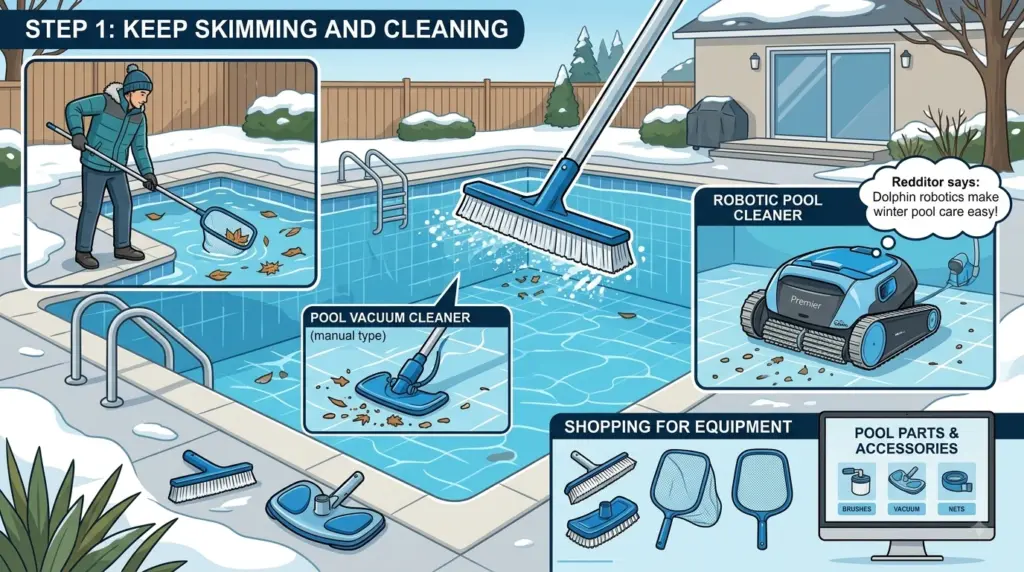
Leaves, twigs, and grime don’t take a break in winter. Skim the surface at least once or twice a week and brush the walls and floor monthly to stop dirt and organic matter from settling in.
A quality pool vacuum cleaner makes short work of heavy debris that sinks to the bottom, ensuring your filtration system isn’t overwhelmed.
If manual cleaning isn’t for you, investing in a robotic pool cleaner allows the job to be handled automatically with far less effort on your part. If you’re shopping for equipment, browsing the pool parts and accessories range is a good place to find brushes, nets, and vacuum heads suited to your pool type. Check what the Redditor has commented about the Dolphin Robotics Pool Cleaner.
“I have a Dolphin and it is great. My maintenance is minimal, my pool is always clean (I live in the South so our pool is never covered), and I just empty the machine once a week. My other maintenance for the pool is also adding some pucks, cleaning the skimmers, and having a beer while in the hot tub.”
Source: r/pools (Reddit)
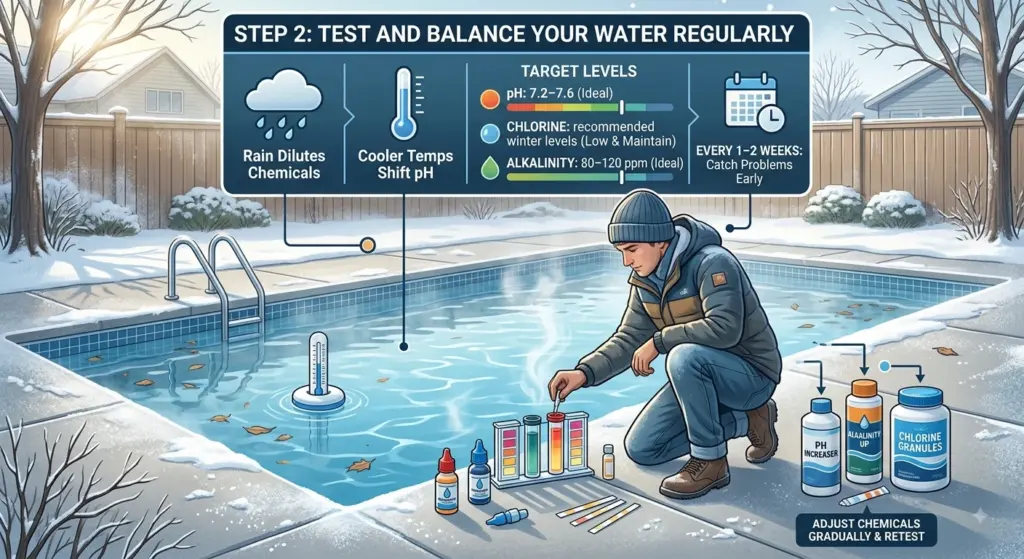
Water chemistry doesn’t stop shifting just because it’s cold outside. Rain dilutes chemicals, and cooler temperatures can throw pH and chlorine levels out of balance.
Testing your water every one to two weeks with a reliable pool water testing kit helps you catch problems before they turn into algae blooms or cloudy water. Aim to keep pH between 7.2–7.6, chlorine at recommended winter levels, and alkalinity between 80–120 ppm. Adjust chemicals gradually and retest after a few days rather than making large adjustments all at once.
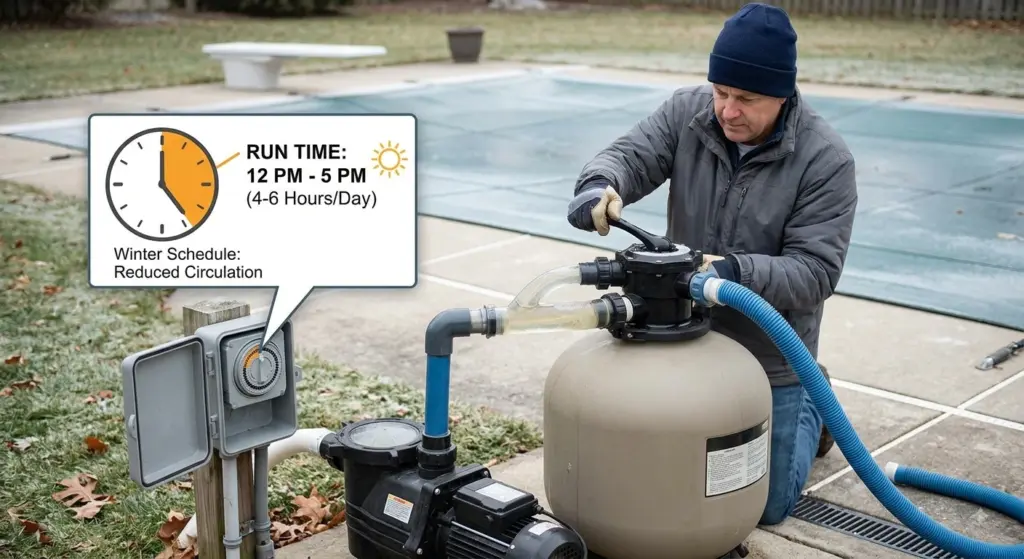
You don’t need to run your pump 24/7 in winter, but cutting it off completely is a mistake many homeowners make. Reducing your filtration cycle to around 4–6 hours a day, ideally during the warmest part of the day, keeps water circulating enough to prevent stagnation without wasting electricity.
Check and clean your filter cartridge or backwash your sand filter regularly as part of your overall swimming pool winter maintenance routine.
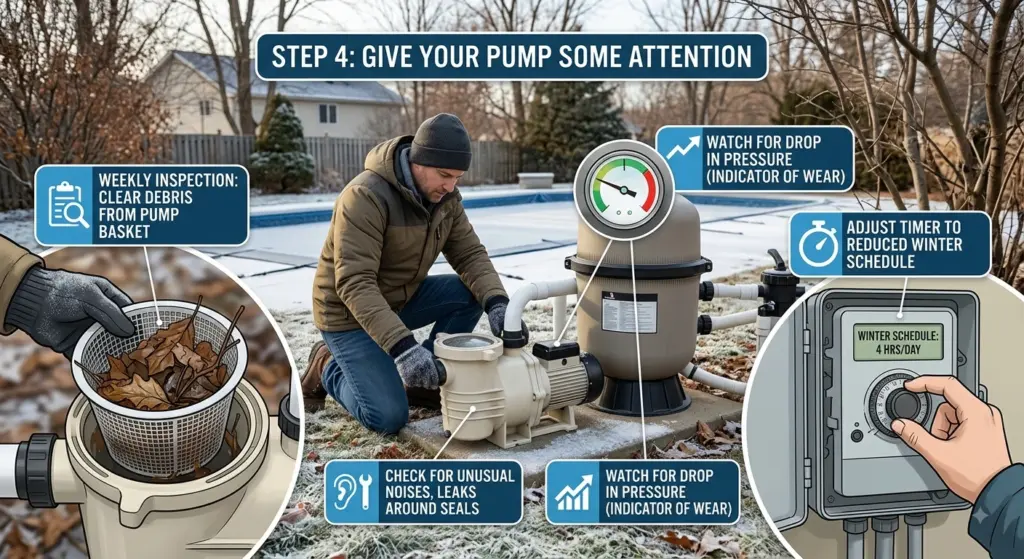
Filtration and pump care go hand in hand, but the pump deserves its own checklist item. Inspect the pump basket weekly and clear out leaves and debris to prevent them from restricting water flow.
Look out for unusual noises, leaks around the seals, or a drop in pressure, as these are early warning signs of wear that are easier and cheaper to fix in winter. If your pump has a timer, adjust it to match your reduced winter schedule so it isn’t running longer than necessary.
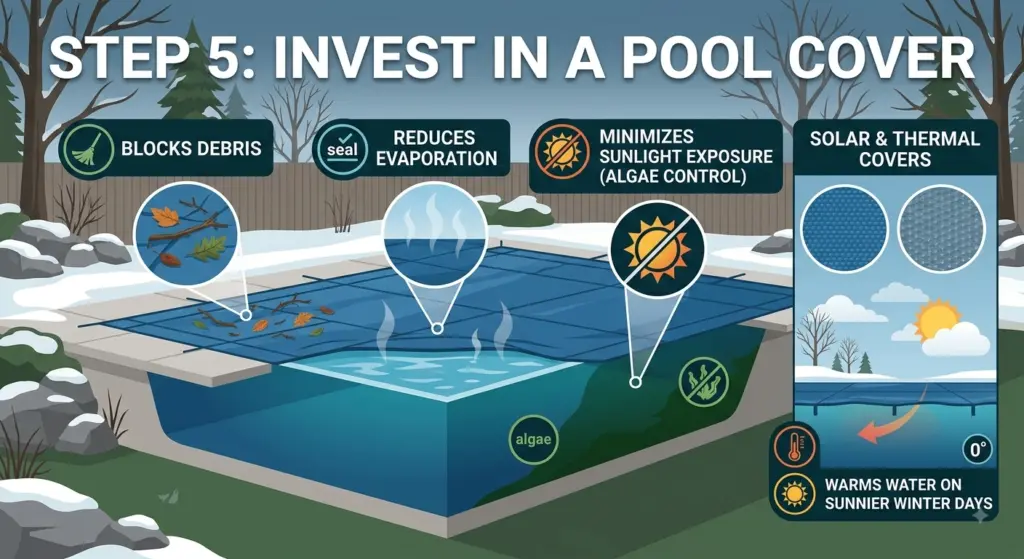
A durable winter pool cover is one of the simplest ways to protect your investment during the off-season. It blocks out leaves and debris, reduces water evaporation, and minimises sunlight exposure that fuels algae growth. Solar and thermal covers are popular options, offering the added bonus of slightly warming the water on sunnier winter days.
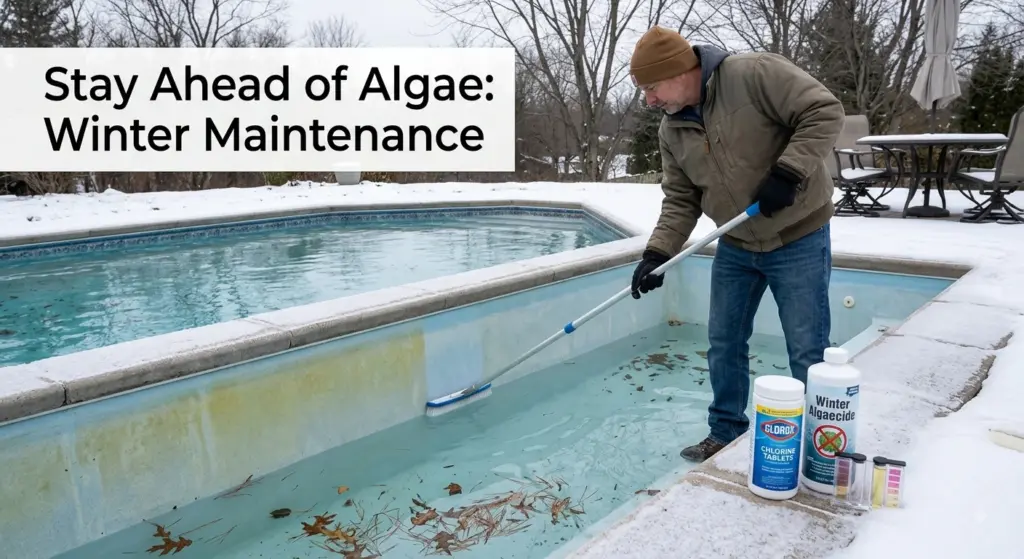
Algae doesn’t disappear in winter; it just grows more slowly, waiting for the right conditions to take over. Brushing the pool walls regularly, maintaining proper sanitiser levels, and using an algaecide when needed all help keep it at bay. If you notice discolouration or a slippery texture on the pool floor, treat it immediately rather than waiting until spring.
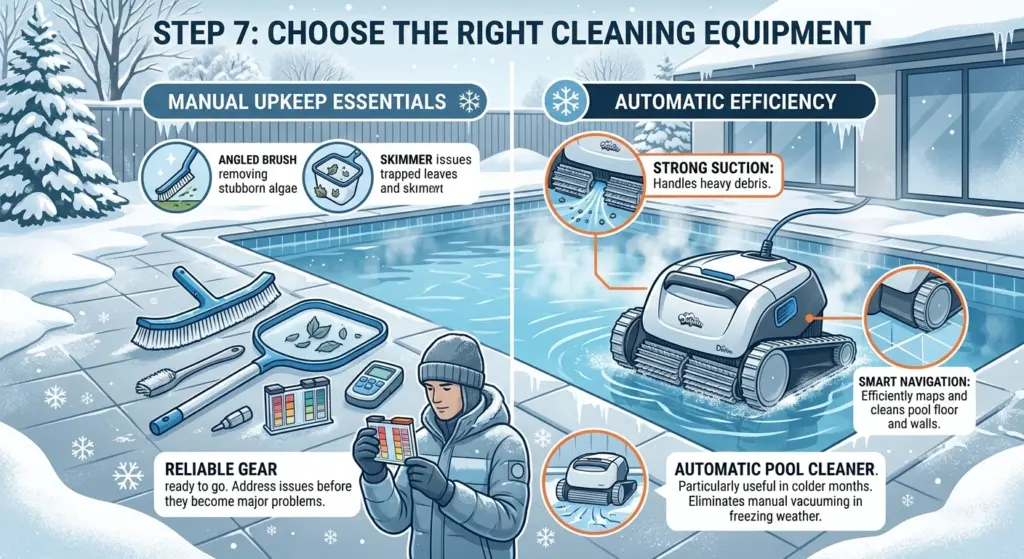
Having reliable pool cleaning equipment on hand makes winter upkeep far less of a chore. Having the right brushes, skimmers, and testing gear ready to go ensures you can address water issues before they turn into major problems.
If you want to automate the process, an automatic pool cleaner is particularly useful during the colder months, since it eliminates the need to vacuum manually in freezing weather.
For top performance, searching for the best robotic pool cleaners gives you access to units that combine strong suction with smart navigation to efficiently handle both heavy debris and algae-prone areas.
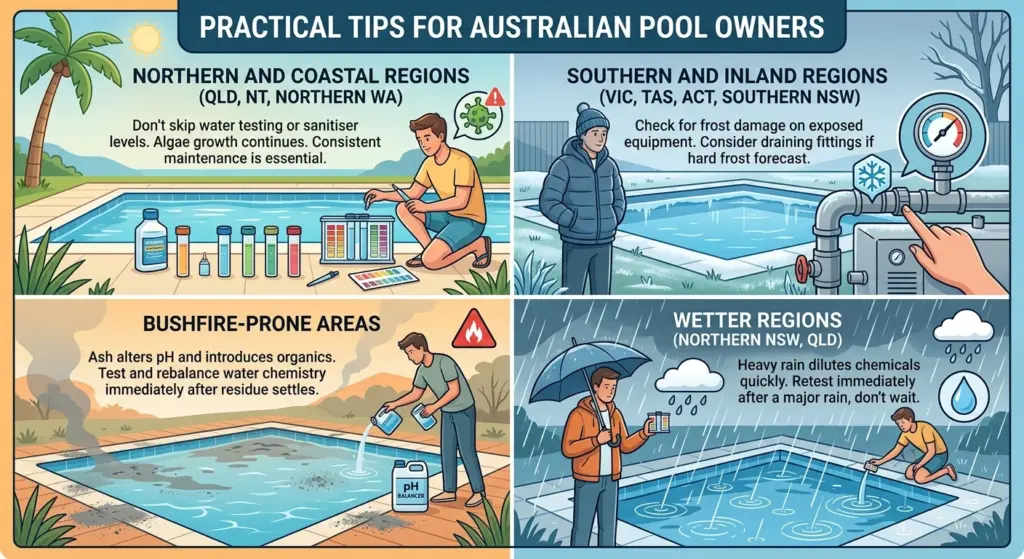
Effective winter pool care isn’t one-size-fits-all across Australia, since climate conditions vary significantly from state to state depending on your geographic location.
Adapting your winter pool maintenance plan to your regional climate ensures your pool remains clean and protected regardless of local weather patterns.
Winter days in northern Australia are often still sunny and mild, which means algae growth can continue at a faster pace than expected. Don’t skip regular water testing or reduce sanitiser levels too drastically just because it’s winter on the calendar. Sticking to consistent winter pool maintenance tips is especially important in these milder climates.
Overnight frosts are far more common in southern regions, which can damage unprotected pool systems. Check exposed pipes and equipment regularly for freeze damage, and consider draining water from above-ground fittings if a hard frost is forecast.
If ash or smoke residue settles on your pool after a nearby bushfire, test and rebalance your water chemistry as soon as possible. Ash introduces high levels of organic matter and minerals that can significantly alter pH and compromise water clarity.
Heavy winter rainfall rapidly dilutes pool chemicals, rendering standard maintenance schedules ineffective. Retest your water chemistry immediately after any major downpour, rather than waiting for your usual weekly testing. Adjusting your winter pool maintenance tips to match local rainfall patterns will keep your water balanced year-round.
Winter storms, heavy rain, and sharp frosts in Australia can quickly damage pool gear. Knowing what to watch for helps you prevent costly breakdowns:
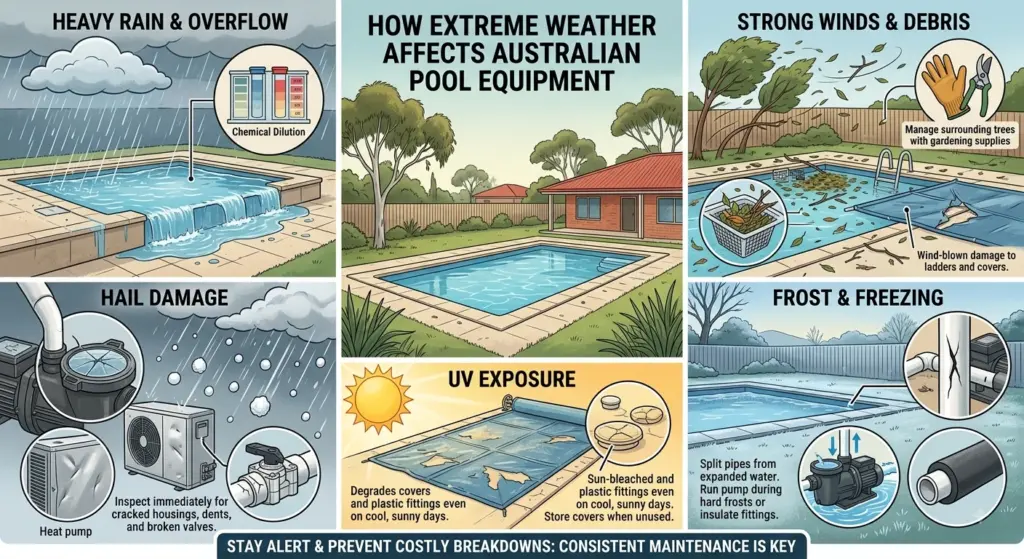
Heavy Rain: Causes overflow and dilutes chemicals.
Strong Winds: Blow debris into the pool. Managing surrounding trees with appropriate gardening supplies helps prevent wind-blown damage to ladders and covers.
Hail: Dents panels and cracks pump housings. Inspect parts immediately after hail, and replace damaged valves or fittings using quality pool parts & accessories.
Frost & Cold Snaps: Expands water inside exposed pipes, causing them to split. Run the pump during hard frosts or insulate exposed fittings to protect them.
UV Exposure: Degrades covers and plastic fittings even on cool, sunny days. Store covers properly when unused.
Check pumps, filters, covers, and wiring for wear before and after severe weather, and disconnect power during major storms.
For protective gear or replacement units, browse the pools’ hot tubs & supplies range. If you manage larger setups, explore the swimming pool tubs category for equipment built to withstand harsh winter weather.
The right winter pool maintenance starts with choosing equipment from brands you can rely on. Here are a few worth considering:
| Brand | Known For | Product Range | Key Feature |
|---|---|---|---|
| Dolphin | Robotic pool cleaners | Robotic cleaners for floors, walls, and waterlines | Advanced navigation and smart scanning technology |
| Polaris | Pressure, suction, and robotic cleaners | Pressure-side, suction-side, and robotic cleaning systems | Strong debris pickup, all-wheel drive, and automated reversing |
| Hayward | Automatic pool cleaners and equipment | Suction, pressure, and robotic cleaners, pumps, and filtration systems | Broad equipment lineup suited to various pool types and surfaces |
| Zodiac | Complete pool equipment and automation | Cleaners, pumps, filters, heating, and lighting solutions | Wide product ecosystem for comprehensive pool maintenance |
Skim weekly and brush the walls and floor at least once a month to prevent debris and algae buildup. Following consistent winter pool maintenance tips like this keeps your pool in good shape all season.
Yes, robotic pool cleaners work well year-round and are especially handy in winter since they reduce the need for manual vacuuming in the cold.
A pool cover isn’t strictly mandatory, but it significantly reduces debris, evaporation, and algae growth, making it one of the easiest winter pool maintenance tips to follow.
Maintain proper sanitiser levels, brush the pool regularly, and use an algaecide if you notice early signs of growth. These winter pool maintenance tips help prevent algae from taking hold.
Focus on balanced pH, adequate chlorine or sanitiser, and correct alkalinity, adjusting gradually based on regular water testing.
A pool cover, water-testing kit, vacuum or robotic cleaner, and basic brushing tools meet most winter maintenance needs. Having the right gear on hand makes these winter pool maintenance tips far easier to put into practice.

Ubuy content team consist of various writers specializing in different niches. They write blogs about different topics ranging from science, human relationships to the latest technology to share their thoughts, ideas and knowledge with the world.

Get every Newsletter